American Libraries Magazine Menu
  • Magazine
    • Current Issue
    • Issue Archive
    • Features
    • Trends
    • Columns
    • Newsmakers
    • Spotlights
    • By the Numbers
    • Bookend
    • People
    • Library Systems Report
    • Design Showcase
  • Trending
    • Artificial Intelligence
    • Equity, Diversity, and Inclusion
    • Intellectual Freedom
    • Sustainability
    • Advocacy
    • Inside ALA
    • Jobs
    • Library Systems Report
  • AL Direct
  • The Scoop blog
  • JobLIST
  • AL Live webinars
  • #ALA150
  • #ALAAC26

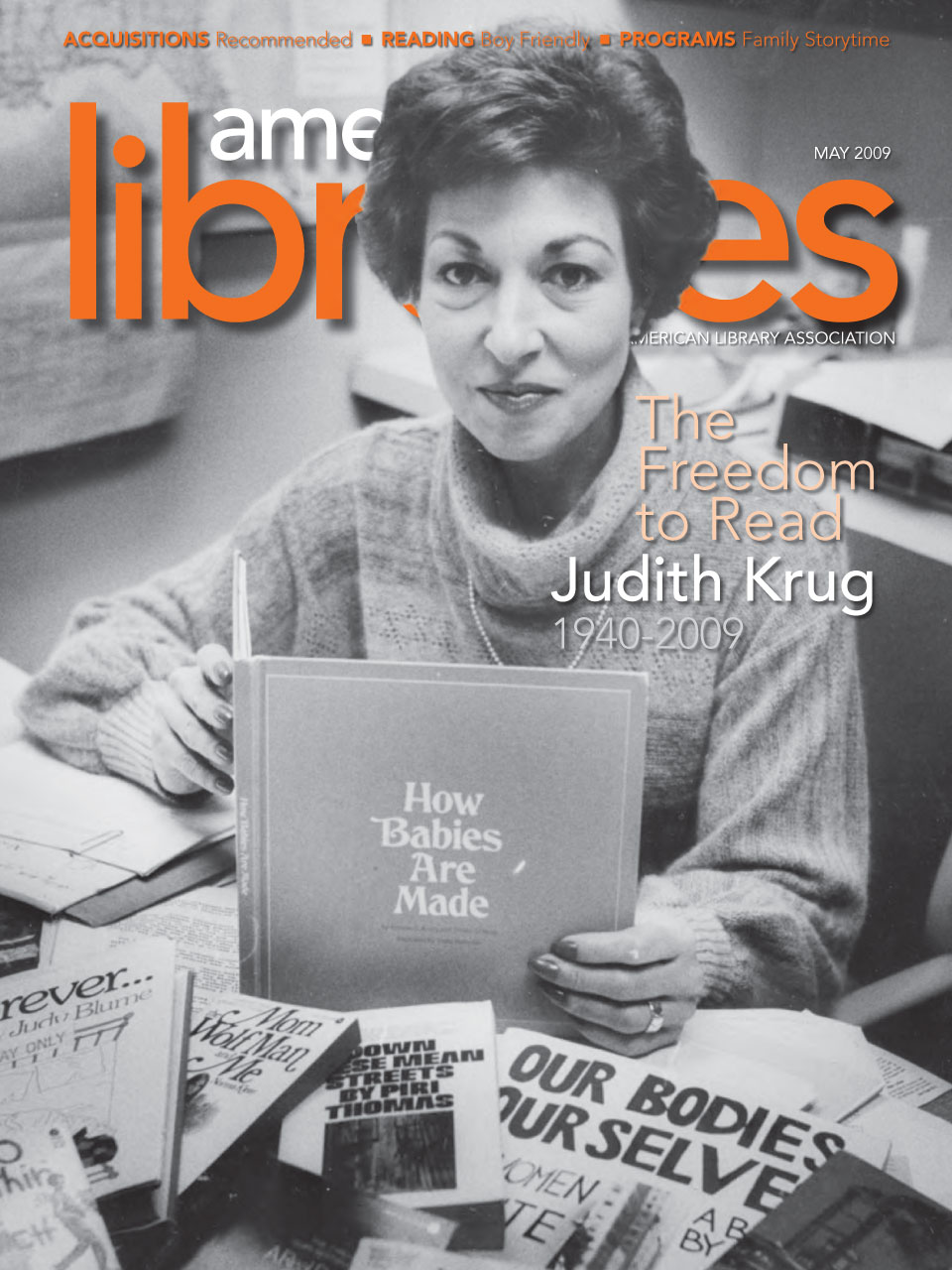
May 2009

View print version
Download PDF

Latest Library Links

  • 1h

    Metal card catalogGreta Heng, Patricia Lampron, and Myung-Ja Han write: “While generative artificial intelligence (AI) shows some potential as a supplementary tool, it is not capable of replacing catalogers. Metadata creation is not merely a task of transcription or extracting information from a cover page; it requires critical judgment, subject expertise, and contextual understanding that current generative AI models are not capable of replicating. The inability of these tools to consistently follow detailed cataloging rules, validate authority data, or apply complex subject headings highlights their limitations and immaturity in the library domain. Responsible integration of AI into cataloging workflows must acknowledge these shortcomings and guard against overreliance.”

    Information Technology and Libraries, vol. 45, no. 2, June 15

  • 7h

    Show Up For Our Libraries logoJoey Wender writes: “On June 4, the Federal Communications Commission (FCC) released a draft proposal that should alarm schools and libraries around the country. Tucked inside a long document is a direct question: Should the E-Rate program be ‘limited or sunset’? When E-Rate began in the late 1990s, most schools and libraries had little or no internet access. Today, nearly every school in the country has a high-speed connection. The FCC points to that success and suggests the job is finished. The reality is the opposite. That connectivity exists because E-Rate supports it year after year.”

    American Libraries Online, June 16, Benton Institute for Broadband and Society Digital Beat, June 11

  • 1d

    Sarah LamdanEarlier this year, Sarah Lamdan was promoted to executive director of ALA’s Office for Intellectual Freedom (OIF) after joining the Association in 2024 as OIF deputy director. Prior to joining ALA, Lamdan was a librarian and law professor at City University of New York School of Law, where her research focused on information access, privacy, and other legal issues related to librarianship. She is author of two books, most recently Data Cartels, which looks at privacy and access as they relate to data analytics companies and platforms. Lamdan answered our 11 Questions to introduce herself to ALA members.

    AL: The Scoop, June 16

  • 2d

    Frazzled leaderAlejandro Marquez writes: “When I graduated from library school, I wanted to become an administrator. I envisioned myself leading teams, shaping the direction of the organization I joined, and advocating for the people and projects I believed in. However, I encountered persistent constraints around budgets and time, faced overwhelming workloads, and, most significantly, was confronted with the ongoing need to support and mentor struggling colleagues. A significant number of talented and dedicated library workers are saying ‘no’ to traditional managerial roles. This essay will explore the factors driving this trend.”

    Choice 360 LibTech Insights, June 9

  • 2d

    Man in thought overlaid with technological paraphernaliaElizabeth Szkirpan writes: “Generative artificial intelligence (AI) is quickly becoming ubiquitous. Its integration is not just limited to our personal technology but now also includes library resources. Meanwhile, vendors are constantly introducing new tools or integrations into existing products, and we must measure emerging AI platforms against our library’s tried-and-true resources to gauge which ones truly bring a new perspective or added value to our collections. To cut through the noise, I’ve narrowed down my queries for vendors to five questions to better understand how a new AI tool might enhance my library’s user experience.”

    American Libraries feature, Summer

  • 2d

    Megha MajumdarDonna Seaman writes: “Megha Majumdar lit up the book world in 2020 with her first novel, A Burning, a galvanizing tale of social media and tyranny. It became a bestseller, was named best book of the year by many publications, and was a finalist for ALA’s Carnegie Medal for Excellence in Fiction. Her gripping second novel, A Guardian and a Thief, is set in a near-future Kolkata besieged by the ever-worsening climate crisis. It received this year’s Carnegie Medal, which will be presented to Majumdar on June 27 at ALA’s Annual Conference and Exhibition in Chicago.”

    American Libraries Trend, Summer

  • 5d

    The Buffalo Hunter HunterJen Lennon writes: “The Science Fiction and Fantasy Writers of America held its 61st annual Nebula Awards June 6, celebrating the best sci-fi and fantasy writing from 2025. The awards cover a broad swath of mediums, including literature, film, television, and games writing. Stephen Graham Jones took home the top prize for his novel The Buffalo Hunter Hunter.” The same day, Jones’s book also took the Superior Achievement in a Novel prize at the Bram Stoker Awards, presented by the Horror Writers Association to recognize outstanding horror writing.

    Gizmodo, June 9; Nebula Awards, June 6; Bram Stoker Awards, June 7

View more Latest Library Links

AL Live

al-live-logo@2x

AL Live screenshot with laptop


American Libraries Magazine

A publication of the American Library Association

  • Facebook
  • Twitter
  • BlueSky
  • RSS
  • Advertising
  • About
  • Comment Policy
  • Contact
  • Subscriptions
  • Submissions
  • Privacy Policy
  • Copyright/Terms of Use Statement
  • Site Help
American Library Association
  • ALA Home
  • JobLIST
  • ALA News
  • ALA Store
  • Strategic Directions

225 N. Michigan Ave., Suite 1300, Chicago, IL 60601

1.800.545.2433

© 2009–2026 American Library Association