American Libraries Magazine Menu
  • Magazine
    • Current Issue
    • Issue Archive
    • Features
    • Trends
    • Columns
    • Newsmakers
    • Spotlights
    • By the Numbers
    • Bookend
    • People
    • Library Systems Report
    • Design Showcase
  • Trending
    • Artificial Intelligence
    • Equity, Diversity, and Inclusion
    • Intellectual Freedom
    • Sustainability
    • Advocacy
    • Inside ALA
    • Jobs
    • Library Systems Report
  • AL Direct
  • The Scoop blog
  • JobLIST
  • AL Live webinars
  • #ALA150

national-ag-library-150

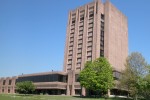
March 18, 2025 150 × 100 DOGE order causes National Agricultural Library to cancel 400 journals
National Agricultural Library

National Agricultural Library

Latest Library Links

  • 4m

    Lone, bare tree in a field at sunsetMiles Klee writes: “The internet must be put out of its misery. Any rational observer can admit that the current iteration of the web—and the social fabric woven there—is not what they signed up for. To be online, many now admit, is to be endlessly manipulated and exploited. Wouldn’t it be liberating to actually deny our attention to astroturfed outrage, engineered virality, and influencer sponcon? There’s no reason to assume that the present tech empire will rule the century to come; the organic and anarchic web stands to mount a triumphant renaissance if (or when) it falls.”

    Wired, Oct. 28

  • 2h

    Man with his face in his hands with 1s and 0s overlaid.Sarah Zipf, Tehniyet Azam, and Eric Grego write: “This study seeks to understand how academic library workers feel about the future of their work in relation to new and existing technologies. Using 54 completed surveys, and a combination of descriptive statistics and open, thematic coding, the authors find that the relationship between technology and the future of work is complex. While library workers are not overtly concerned about job loss, they believe the influx of technology contributes to a devaluation of their profession and work. Technology is a readily accepted component of the job but comes with caution.”

    portal: Libraries and the Academy, vol. 26, no. 4, Oct.

  • 5h

    African American Research Library and Cultural CenterNatu Tweh writes: “Earlier this year, Florida Gov. Ron DeSantis signed Senate Bill 1134 into law. Beginning January 1, it will limit how local governments can spend public money on certain diversity, equity, and inclusion programs. The African American Research Library and Cultural Center in Fort Lauderdale is among many organizations in South Florida taking evasive action after finding themselves in the crosshairs of the bill. It means they have already planned to cancel or change some county-supported events, such as their annual Kwanzaa celebration.”

    WLRN-FM (Miami), Oct. 30

  • 20h

    Emergency radioHana Lee Goldin writes: “On October 22, the UK government launched Be Ready, a campaign asking households to prepare for three days of disruption. The campaign’s website names cyberattacks alongside severe weather as emergencies that can disrupt everyday services. Be Ready’s checklist includes copies of key documents, important phone numbers, and an FM radio alongside food and water. Those items are a great start, but information needs a kit of its own. In an emergency, we need to know whose warnings to trust and how to check an alarming claim when official sites go dark.”

    Card Catalog, Oct. 28

  • 23h

    Lavonnia MooreKatie Burkholder writes: “Lavonnia Moore, former branch manager of Pierce County (Ga.) Public Library, filed a lawsuit against the library system after she was fired for allowing a child to include the book When Aidan Became a Brother by Kyle Lukoff in a ‘Color Our World’ reading display in June 2025. The book includes a transgender character. Unbeknownst to Moore until her termination,” the book sparked a campaign by the Alliance for Faith and Family….

    Rough Draft Atlanta, Oct. 30; July 5, 2025

  • 1d

    Grain silosHolly Miller and Nancy Garmer write: “Academic libraries are often organized into discrete departments that have little to no interaction. This article describes how one mid-sized library with 30 librarians and professional staffers used cross-functional teams to encourage personnel to interact in new ways and cultivate new skills. The teams helped develop leadership and project management skills in team members who were not currently in library leadership roles. This approach accomplished essential infrastructure projects while growing employees’ competencies and fostering ownership and engagement within the library.”

    Library Leadership and Management, vol. 39, no. 3, Oct. 29

  • 1d

    Venn diagram illustrating the zone of proximal development, in the overlap of two circles otherwise labeled "Can do alone" and "too difficult even with support"Janice Chuang writes: “Public library storytimes are more than just a fun time for children; beneath the read-alouds, songs, fingerplays, bubbles, and movement activities are abundant opportunities to support children’s literacy learning. One way to do this is by incorporating the Zone of Proximal Development (ZPD), an educational theory by Lev Vygotsky, into storytime planning and design. With a little bit of foreplanning, we can structure literacy experiences to align with children’s developmental levels. This article provides an introduction and practical tips for storytime providers on how to intentionally scaffold learning during picture book reading in storytime using the ZPD.”

    Public Libraries Online, Nov. 2

View more Latest Library Links

AL Live

al-live-logo@2x

AL Live screenshot with laptop


American Libraries Magazine

A publication of the American Library Association

  • Facebook
  • Twitter
  • BlueSky
  • RSS
  • Advertising
  • About
  • Comment Policy
  • Contact
  • Subscriptions
  • Submissions
  • Privacy Policy
  • Copyright/Terms of Use Statement
  • Site Help
American Library Association
  • ALA Home
  • JobLIST
  • ALA News
  • ALA Store
  • Strategic Directions

225 N. Michigan Ave., Suite 1300, Chicago, IL 60601

1.800.545.2433

© 2009–2026 American Library Association