
Latest Library Links
-
 “A new Taylor Swift album is always a big event on the internet, including fans carefully reading into every line for hidden meaning—a little like close reading poetry. But while Swifties have celebrated Taylor Swift’s lyricism from the beginning, no album invites comparisons to literature quite like The Tortured Poets Department, if just for the title. Already, outlets have been putting together reading lists to pair with each song on the album. Here are just a few to get you started.”
 -
 Chris Hoffman writes: “When I was younger, I was told ‘never use your real name on the internet.’ But the world has changed, and I don’t follow that advice anymore. Likewise, there’s a lot of well-meaning online security advice that has outlasted its usefulness. There’s a core of truth to each one of the security practices I criticize below, but you shouldn’t blindly follow these old tips. At best, you’ll be wasting your time. At worst, you’ll be putting yourself more at risk. Read on to learn more about the five outdated security practices you shouldn’t use anymore.”
 -
 Bobbi L. Newman writes: “This week, an article from the BBC caught my attention: ‘Without support, many menopausal workers are quitting their jobs.’ Supporting employees going through menopause is important for those experiencing it and for everyone’s wellbeing. It reflects a commitment to employee wellbeing and a strategic approach to workforce management. Libraries can adopt strategies to support employees experiencing menopause, enhancing their wellbeing and workplace productivity. Remember, with all wellbeing, the goal is to support and empower staff to make the choices that best improve their health. Here are some practical approaches.”
 -
 Libraries have a long history of helping to deliver on a wide variety of development goals, from literacy and school readiness to research productivity and urban cohesion. Their unique potential has been recognized not just by the governments or others that traditionally fund them, but also by a range of other funders, private and public alike. The International Federation of Library Associations and Institutions has created a dataset to help librarians easily discover examples of private philanthropic grants, as well as other funding sources, that other libraries have been able to leverage.”
International Federation of Library Associations and Institutions, Apr. 22
-
 Jackie Jennings writes: “It feels like the debate over whether #BookTok is bad has been raging since the moment the term was first coined. I’m starting off with a strong stance: BookTok is indeed bad. However, the problem with BookTok is not crappy books or bogus influencers. The problem with BookTok is TikTok itself. BookTok isn’t actually a community driven by fans, writers, influencers, or even publishers: it’s part of a social media corporation, controlled by the most mysterious, fickle god of all, the algorithm.” Not surprisingly, librarian recommendations can overcome some of BookTok’s limitations.
 -
 ALA announced the launch of its state Intellectual Freedom Helpline grant program April 22. Over the next two years, 10 pilot program sites will operate a confidential reporting system that will help connect those experiencing censorship attempts with professional support, in-state peers, or referral to ALA’s Office for Intellectual Freedom, as appropriate. State or school library associations or agencies wishing to either establish an Intellectual Freedom Helpline in their state or expand existing efforts may apply for $10,000 grants through July 14.
 -
 In celebration of the release of his latest nonfiction title, The Secret Lives of Booksellers & Librarians, bestselling author James Patterson is honoring select American Bookseller Association and American Library Association members with bonuses. He announced plans April 11 to give $200 each to 250 library workers across the country. The deadline for ALA members may nominate members to receive bonuses through April 30. Winners will be announced at ALA’s 2024 Annual Conference in San Diego.
 -
 Catherine Hollerbach writes: “In early 2020, when the world shut down for COVID, many people got interested in houseplants. Anne Arundel County (Md.) Public Library’s Crofton Library embraced this trend and then some!” While preparing to reopen after the COVID shutdown, the library installed plants at the information desk to discourage patrons from sticking their heads through gaps in newly installed acrylic shields. They were well received and cared for, and the library gradually added more plants and built educational tools, programming, and partnerships around the plants.
 -
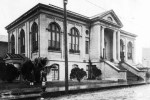 Rodney Freeman writes: “I am proud to be a librarian—and rare. Less than 7% of librarians in the US are Black. Libraries symbolize the literacy that was denied to so many of our ancestors. For our enslaved forebears, something as fundamental as learning to read was illegal and dangerous, but they did it anyway. Separate but ‘equal’ schools and ‘colored’ libraries filled with cast-offs from white libraries were key features of the Jim Crow era. Today we are seeing the same impulse to distort access to information into a tool to suppress and control, and to make some people ‘other.’”
 -
 Lori Birrell writes: “Staff want to feel valued, and they want their work to have an impact. A reorganization process can help leaders to surface such areas of impact and give staff a feeling of empowerment and value. Practitioners considering any sized reorganization are strongly encouraged to consider what models and resources will best support them as they plan and lead this work. Regardless of the model or resources, any reorganization process should be more than just moving boxes and reporting lines around on an organizational chart.”
 -
 Megan Bennett writes: “Two decades ago, while Daily Show Senior Correspondent Dulcé Sloan was doing summer shows at a community theater in Quakertown, Pennsylvania, the library was her main hangout spot. In the small town of 9,000 people, it was a place to gather with other young actors—and the only place with internet access. American Libraries spoke with Sloan before her closing session at the Public Library Association 2024 Conference in Columbus, Ohio, about her new book, her journey in stand-up comedy, and her memories of libraries.”
 -
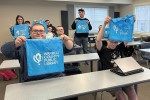 Ashley Cosby Fowlkes writes: “In February 2023, Warren County (Ky.) Public Library (WCPL) began working with LifeWorks at Western Kentucky University in Bowling Green, a residential community for neurodiverse young adults that focuses on independent living and job readiness. By May, WCPL opened a satellite location at LifeWorks—making it the state’s first public library branch dedicated to serving neurodiverse patrons. The satellite is designed to be a sensory-sensitive environment, enabling individuals with autism, ADHD, or other learning differences—who can become overstimulated in crowded public areas—to concentrate on their studies, read a book, or browse digital library resources.”
All links outside americanlibrariesmagazine.org are provided for informational purposes only. Questions about the content of any external site should be addressed to the administrator of that site.