American Libraries Magazine Menu
  • Magazine
    • Current Issue
    • Issue Archive
    • Features
    • Trends
    • Columns
    • Newsmakers
    • Spotlights
    • By the Numbers
    • Bookend
    • People
    • Library Systems Report
    • Design Showcase
  • Trending
    • Artificial Intelligence
    • Equity, Diversity, and Inclusion
    • Intellectual Freedom
    • Sustainability
    • Advocacy
    • Inside ALA
    • Jobs
    • Library Systems Report
  • AL Direct
  • The Scoop blog
  • Podcast
  • JobLIST
  • AL Live webinars

IFLA-offlineinternet-final

August 28, 2019 650 × 397 IFLA: Providing Access without Connection
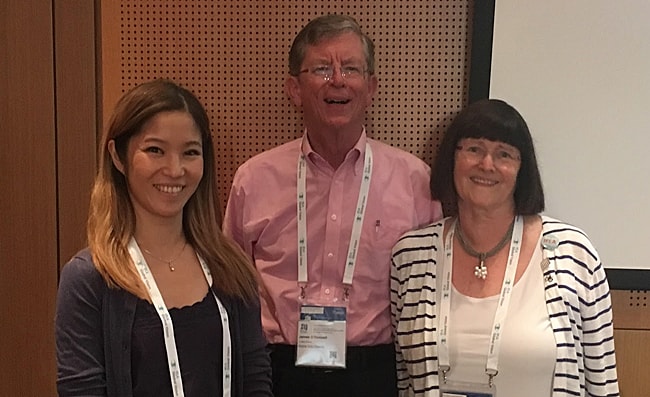
From left: Muy-Cheng Peich, Jim O'Donnell, and Ann Okerson

From left: Muy-Cheng Peich, Jim O’Donnell, and Ann Okerson

From left: Muy-Cheng Peich, Jim O’Donnell, and Ann Okerson

Latest Library Links

  • 2h

    Collection of Nos in multi-colored circlesHannah Cyrus writes: “There’s nothing neutral about Gmail, artificial intelligence, Microsoft, or Facebook. These tools, systems, and platforms endanger our patrons and communities in ways that are both direct (subjecting them to surveillance and selling their personal information to data brokers and government agencies) and indirect (via the growing political influence wielded by their CEOs). People, whether beginners or seasoned computer users, can tell that technology is no longer working for them. They may still be locked into some of these systems, but they are ready to start figuring out how to resist. This is where libraries can come in.”

    Information Technology and Libraries, vol. 45, no. 1, Mar. 16

  • 7h

    Family playing a block-stacking game

    Rachele Harmuth writes: “When children engage in play—whether solving a puzzle, creating stories, or playing a game—they are doing far more than passing time. Play helps children practice important skills that support mental, emotional, and social health. Many caregivers recognize the importance of reading and academic learning, but may not always realize that play is equally critical for building life skills. Libraries are in a unique position to help families make that connection. Libraries interested in participating in the MESH Helps Play for Resilience campaign during Mental Health Awareness Month can apply to receive resources and materials through March 31.”

    Games and Gaming Round Table, Mar. 12

  • 10h

    Woman in a library giving a high-five. Illustration: Visual GenerationSallyann Price writes: “Bad-news fatigue is real for library advocates who feel like every year is more hostile than the one before it. Since about 2021, coordinated groups of parents and elected officials have increasingly pushed to outsource librarians’ curatorial authority and exert greater control over what books are available on library shelves. But in 2025, there were notable examples of voters, courts, and candidates across the country affirming the profession’s core values of intellectual freedom and inclusive access. Below we highlight five recent victories for libraries, library workers, and their communities.”

    American Libraries feature, Mar./Apr.

  • 3d

    Microsoft Word logoOluwademilade Afolabi writes: “Most people who use Microsoft Word daily still don’t know that Spike exists, and that’s a shame. It’s not tucked behind a subscription wall or buried in a settings menu nobody opens. It’s right there, bound to a keyboard shortcut, waiting. I stumbled across it while trying to rearrange a lengthy report without endlessly cycling through copy-paste operations, and it has changed the way I think about editing in Word. It’s a secondary clipboard that accumulates multiple chunks of content and holds them all until you’re ready to drop them exactly where you need them.”

    MakeUseOf, Mar. 6

  • 3d

    Woman in a library with a stack of books for a headMarissa Levien writes: “Reading goals aren’t a new phenomenon—there’s a whole generation of us who grew up with the promise that, if we read a certain number of books in a summer, our local library would be obligated to throw us a pizza party. But if we’re gamifying our reading, we stop reading widely: we pick different versions of a story that we are guaranteed to like, and with that we lose a sense of well-roundedness, a sense of discovery and surprise. On a deeper level, it also means that we give up the art of reading slowly.”

    Literary Hub, Mar. 5

  • 4d

    Multi-floor libraryHana Lee Goldin writes: “Most of us might experience algorithmic curation as helpful. The system learns our preferences and filters out what seems irrelevant. But the filter doesn’t distinguish between content we don’t want and content we’ve simply never encountered. It removes both—including ideas, opportunities, and perspectives we might value if we knew they existed. Each prediction based on our past behavior assumes our future interests will mirror our history.”

    Card Catalog, Mar. 10

  • 4d

    Man with robotic armGreyson Pasiak writes: “Academic librarians are increasingly tasked with creating and implementing new policies and ethical guidelines surrounding generative artificial intelligence’s (AI) role in research and publishing practices. They are called through vocational language to educate on safe, transparent, and responsible use of AI. These new roles and responsibilities are coupled with insufficient time and general support, resulting in faculty and staff feeling fatigued. Many have already addressed how fatigue in higher education can ultimately lead to interruptions in publishing support and academic research if not addressed.”

    The Scholarly Kitchen, Mar. 4

View more Latest Library Links

AL Live

al-live-logo@2x

AL Live screenshot with laptop


American Libraries Magazine

A publication of the American Library Association

  • Facebook
  • Twitter
  • BlueSky
  • RSS
  • Advertising
  • About
  • Comment Policy
  • Contact
  • Subscriptions
  • Submissions
  • Privacy Policy
  • Copyright/Terms of Use Statement
  • Site Help
American Library Association
  • ALA Home
  • JobLIST
  • ALA News
  • ALA Store
  • Strategic Directions

225 N. Michigan Ave., Suite 1300, Chicago, IL 60601

1.800.545.2433

© 2009–2026 American Library Association