
American Libraries Magazine Menu
  • Magazine
    • Current Issue
    • Issue Archive
    • Features
    • Trends
    • Columns
    • Newsmakers
    • Spotlights
    • By the Numbers
    • Bookend
    • People
    • Library Systems Report
    • Design Showcase
  • Trending
    • Artificial Intelligence
    • Equity, Diversity, and Inclusion
    • Intellectual Freedom
    • Sustainability
    • Advocacy
    • Inside ALA
    • Jobs
    • Library Systems Report
  • AL Direct
  • The Scoop blog
  • JobLIST
  • AL Live webinars
  • #ALA150
  • 4y

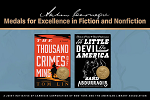
    2022 Carnegie Medal winnersThe American Library Association has selected The Thousand Crimes of Ming Tsu (Little, Brown and Company) by Tom Lin as the winner of the 2022 Andrew Carnegie Medal for Excellence in Fiction and A Little Devil in America: Notes in Praise of Black Performance (Random House) by Hanif Abdurraqib as the winner of the 2022 Andrew Carnegie Medal for Excellence in Nonfiction. The selections were announced during ALA’s inaugural LibLearnX conference January 23 at the Reference and User Services Association’s Book and Media Awards virtual event. “Congratulations to both medalists for gifting readers with essential antidotes to the polarizing challenges we continue to face,” said Terry Hong, chair of the selection committee for the 2022 Andrew Carnegie Medals for Excellence.”

    AL: The Scoop, Jan. 23

  • Latest Library Links

    • 7h

      From the Trustees by Brett BonfieldBrett Bonfield writes: “When it comes to the ALA’s more than $66 million endowment, we trustees are mindful of the ethical impact of the Association’s investments. That’s where ESG—or environmental, social, and governance—investing comes in. ESG investing refers to the practice of incorporating environmental impact, social issues, and corporate governance into investing decisions. This column will answer the primary questions that endowment trustees are asked about ESG investments—and how ALA approaches them.”

      American Libraries Online, May 11

    • 11h

      From the Executive Director by Dan MontgomeryDan Montgomery writes: “While the commemoration of ALA’s 150th anniversary kicked off in January, ALA staff and member leaders have been building momentum toward its largest in-person celebration, the 2026 Annual Conference and Exhibition in our hometown of Chicago. I feel honored and privileged to be here in this moment as we celebrate this Magnificent Milestone! (Did you catch my Chicago pun?) I invite you to join your colleagues at Annual to observe our past, reflect on our present, and envision our future.”

      American Libraries column, May

    • 15h

      A Seat at the TableAnne Ford writes: “For 150 years, ALA has shaped the landscape of libraries and the profession itself—but its leadership has often reflected the racial and gender biases of society at large. For this special anniversary issue, American Libraries spoke with eight barrier-busting Association leaders about their struggles, triumphs, breakdowns, and breakthroughs. The stories and lessons they share reveal how diversity fuels and transforms the power of libraries everywhere.”

      American Libraries feature, May

    • 3d

      Mural outside Columbus State University's Simon Schwob Memorial Library Thomas W. Ganzevoort writes: “Columbus (Ga.) State University’s Simon Schwob Memorial Library is home to one obsolete feature: the library’s loading dock, an original part of the 1975 structure. Rarely used after the library basement was renovated in 2012, the loading dock was repurposed as a patio deck. A 2019 renovation added safety gate and railing, a fresh coat of paint and some picnic tables. However, something was still missing. During Spring Break 2026, what has become known as the Library Mural Project reached its fruition, when an army of volunteers descended on the loading dock to make the mural a reality.”

      Georgia Library Quarterly, vol. 63, no. 2, May 1

    • 4d

      Origami boatAdrienne De Luna writes: “Passive programming gets a bad reputation. But in the right environment—especially in youth services—passive programming isn’t just helpful. It’s essential. Not all passive programming works. And when it doesn’t, it’s usually not because of the idea—it’s because of the execution. Most passive programs fall flat when they are too complicated, not immediately visible, overexplained, not relevant to the age group, or left out too long.”

      Youth Services Playbook, May 1

    • 4d

      Historic family photosMars Brint writes: “In honor of Preservation Week, I’d like to discuss the importance and enjoyment of digging through old records. People want to know their history, understand their roots, and create a connection with the past, and it is such a pleasure to be able to help bridge that information and share resources. So I’ve decided to include some of my own basic tips, tricks, and resources that can help others find genealogical information in a pinch.”

      NMRT Notes, May 1

    • 5d

      Paper with decision-making matrix on itAaron Tay writes: “Evaluation frameworks are a serious thread in information literacy, collection assessment, and procurement. The demand for them is real. My worry is that many evaluation matrices try to do too much at once. They aim to be universal. They give every criterion a score. They weight too many things equally. They also rely heavily on qualitative impressions, including for the thing that matters most when evaluating search tools: Whether the tool can retrieve and rank useful material.”

      Aaron Tay’s Musings about Librarianship, Apr. 29

    View more Latest Library Links

    AL Live

    al-live-logo@2x

    AL Live screenshot with laptop


    American Libraries Magazine

    A publication of the American Library Association

    • Facebook
    • Twitter
    • BlueSky
    • RSS
    • Advertising
    • About
    • Comment Policy
    • Contact
    • Subscriptions
    • Submissions
    • Privacy Policy
    • Copyright/Terms of Use Statement
    • Site Help
    American Library Association
    • ALA Home
    • JobLIST
    • ALA News
    • ALA Store
    • Strategic Directions

    225 N. Michigan Ave., Suite 1300, Chicago, IL 60601

    1.800.545.2433

    © 2009–2026 American Library Association