The troubling trend of book challenges and bans in libraries across the US continues. In 2025, 4,235 titles were banned or challenged at public, school, or university libraries, according to the American Library Association’s (ALA) State of America’s Libraries 2026 report. This figure was the second highest (following the record set in 2023) since ALA’s Office for Intellectual Freedom (OIF) began documenting censorship attempts in 1990.
Behind each title is an author being professionally—and sometimes personally—targeted for the stories they have chosen to share. These works usually amplify marginalized voices such as abuse victims or those within the LGBTQ+ community.
American Libraries spoke with five authors on the Top 11 Most Challenged Books of 2025 list included in the report to hear how their experiences affected them. Interviews have been edited for space and clarity. Read Part 1 for the first two interviews with Patricia McCormick and Stephen Chbosky.
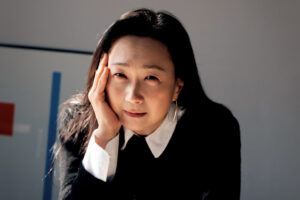
Malinda Lo
In 2021, as books centering LGBTQ+ characters and experiences began being pulled from library shelves at record-setting rates, Lo released her most popular book to date: Last Night at the Telegraph Club. Set in 1950s San Francisco, the book tells the story of 17-year-old Lily Hu as she navigates falling in love in a place and time not ready to accept a same-sex couple. Telegraph Club won that year’s National Book Award for Young People’s Literature, the first time a YA book with a queer female lead had received the prize.
The popularity that the National Book Award and other accolades also attracted the attention of censorship groups and led to the removal of her books from libraries across the US. Telegraph Club appeared on ALA’s Most Challenged Books list for the first time in 2025, tied for #5. This attack on her freedom of speech and expression, Lo says, motivated her to take on an unexpected new role: anti-censorship activist.
LO: I have published seven YA novels, and six of them have been challenged or banned somewhere at least once, but by far the majority of bans are for Telegraph Club. It has been my best-selling book, so it is in the most libraries, and that is why book banners are finding it. I think a lot of these book banners find books through awards and through popularity. They’re not finding these books through reading them.
One thing the book banning has done is that I have felt called to take action to fight book bans and censorship. It’s not necessarily for myself, but seeing the way these book bans affect so many other writers, especially younger and queer writers. They’re in a very precarious position. It has never been lucrative to become an author of queer books in America. But I feel like it has really created a negative environment for many of my fellow writers.
I am an immigrant. I grew up valuing the First Amendment. I knew my family came here to leave China, which does not allow freedom of expression. So I immediately saw book bans as an attack on our First Amendment rights and on writers’ rights to make art and speak their truths in the world.
I’d always been vocal. I have advocated for diversity in young adult books and the publishing business, but now I’ve also gotten involved in local political campaigns. I’m in two lawsuits against the states of Iowa and Idaho. I’m glad I’ve been doing it, but at the same time, it takes so much work that I’m going to have to step back a little because it’s preventing me from writing, which, in a way, is the ultimate goal of these book banners. I’m not going to let them do that.
Most of my career, I’ve been sailing through with very little pushback. I think a lot of people want to ask, “Were you personally hurt by this? Did it impact your ability to create?” For me, the answer is certainly no. But it has made me very angry at a political system that allows this encroachment on our First Amendment rights to continue without repercussion.
Last year, Telegraph Club was banned in all schools in South Carolina, and I was able to connect with some of the student and educator anticensorship activists on the ground. I was really encouraged by how organized and ready to do this battle the people in South Carolina were. I spoke to them at a time when it was starting to feel kind of hopeless. It still feels kind of hopeless. But I was really energized by connecting with them. The South Carolina Board of Education is still trying to ban more books, but I know that there are people there who see the value in freedom of expression, and that was really wonderful for me.
In Massachusetts, where I live, I am a founding member of the Mass Freedom to Read coalition. We launched about a year ago to try to get the Massachusetts State Legislature to pass a freedom to read bill [which was signed into law on August 10]. I have been working with a big coalition of organizations in the state, including the Massachusetts Library Association. I’m part of Authors Against Book Bans, and its Massachusetts chapter has been amazing. It has been a steep learning curve in how democracy works. It is a messy, ugly thing, but I have learned so much, and I have been so energized by working with my fellow authors in this state.
Doing all this activist work, I have realized that a lot of people do not seem to understand that authors write the books that are getting banned. We often talk about books as if they are separate from the people who create them. What Authors Against Book Bans wants our legislators to understand is that it is our voices that are being silenced when our books are getting banned. Authors’ rights are often left out of freedom to read bills in the US. Books are written by people. They are written by us.
I don’t know whether the book bans affect the readers who want to read my books. What I know is that I see these book bans as an effort to shame queer people, particularly to shame queer sexuality. So I always want to make sure to tell my readers that there is nothing shameful about being queer. That’s what my books are about, and I know that if they read them, they will understand that. The dialogue around it is really unfortunate, and I genuinely hope they don’t pay any attention to it. It’s wrong.
Ellen Hopkins
Hopkins has faced challenges to her young adult novels for more than two decades. Her first release, Crank (2004), chronicled a teenage girl’s battle with drug addiction. Since then, the bestselling author’s entire YA collection has addressed similarly heavy topics, including sexual abuse, mental health struggles, and gun violence.
Concerns about her subject matter, she recalls, used to be a chance to speak directly with parents who had concerns for their child. The dialogue was less frantic, and the settings weren’t heated school board meetings. But in recent years, as several of her books have been frequent targets for school and public library bans, Hopkins said she’s been devastated to hear her work described as pornographic and herself a corrupting influence on the young readers she seeks to support.
Two of her titles, Identical (2008) and Tricks (2009), are on this year’s Top 11 list. Identical is about 16-year-old twins who cope with their trauma in differing ways, including substance abuse and self-harm. Tricks follows five teenagers who fall into prostitution.
HOPKINS: I think there are so many people out there who really don’t understand teens. I still have a 17-year-old grandson we’re raising in the house. I’ve been raising kids for a long time, since 1976. I’ve been around teenagers, and I know teenagers. I know the things that affect them; that concern them; the things they’re not concerned about anymore that I think they should be concerned about. I don’t agree with the idea that teenagers can’t handle YA content. YA authors are writing to that audience. I have adult and middle-grade novels, and I know the difference. My job is to know that, just like it’s a librarian’s job to know what is appropriate content for all their different age groups.
People should be able to trust not just authors and librarians but their children to be sophisticated enough to put a book down if it’s too much for them. And if they need the information in that book, even if it makes a parent uncomfortable, there’s a reason why those kids want or need it. It’s important we keep that out there. It’s frustrating to me that the kids who need these books now can’t find them in a lot of spots where they used to be readily available.
I’ve always been open to readers coming to me. I’ve heard from kids who just didn’t know there were people who were going to accept whatever was going on in their lives. There were kids who came to me because they found my books in the library, and they were so grateful that they could find my books because there were things that their parents were not going to discuss with them. I’ve encouraged kids to get help for eating disorders, thoughts of suicide, abuse, all those things that they were afraid to talk to anybody else about. They felt comfortable talking to me because I showed them through writing about this stuff that I cared; someone was seeing, willing to listen to them, and telling their stories for them. They never call me Mrs. Hopkins. They always call me Ellen immediately. They just know I’m a friend.
If you’re saying a book is inappropriate and it represents a person’s experience, it’s pretty much saying that person is inappropriate. That’s true for LGBTQ+ themes for sure, but also addiction, which is something a lot of kids are not going to talk to their parents about. Sometimes it’s librarians that these kids will confide in, because libraries have always been safe spaces for them. I know that because they tell me and because I’ve seen them hanging out there.
Career-wise, the impact of the bans is definitely negative overall. I recently started a book that could have been a YA. The main character was 18, but I aged her up a year because we’re going to market it as an adult novel. I don’t think a publisher right now will pick up an Ellen Hopkins YA, because they’re not going to take a chance. It’s all about sales, and I understand that. School libraries have always been a big part of the YA market, and Texas and Florida are big markets to not be able to have your books in. I also loved doing high school visits. Yeah, there was an income involved with that, but it’s also the potential to talk to kids who live in spaces where I don’t. To talk to kids in Maryland or Alaska and see what affects them, that’s important to me to grow as an author as well.
I’ve thought about retiring, but I’m not satisfied just sitting here growing tomatoes and watching the squirrels peck them. I want to write. This story I’m writing now is keeping me intellectually curious. Older people, if they stop participating in life, a lot of times they hang it up younger than they need to, and I’m not going to do that.
Outside of writing, we are at a crossroads right now in this country. Book banning was the lead in to trying to kill public education, and there’s still a big move to do that. That’s why it’s more important that we keep putting out books, even if we’re not positive we’re going to have readers.
Jennifer L. Armentrout
It’s not just librarians and anti-censorship advocates who are informed and passionate about book challenges. When Armentrout began hearing her fans at events and online discussing their frustration about attempts to remove her books from library shelves, as well as her placement on ALA’s Most Challenged Books list, she realized this issue was trickling down to the casual reader.
Armentrout, who writes bestselling supernatural romance for young adult and adult audiences, made ALA’s list for the first time in 2025 with Storm and Fury. The novel’s 18-year-old protagonist, who suffers from the same progressive eye disease as Armentrout, must navigate a love interest and fend off demons who want to hone her power to see and speak to spirits. The same book was the center of a 2023 national news story after a Santa Rosa County (Fla.) Sheriff’s deputy responded to a call from a Moms for Liberty member who was upset that the book was available in a local school library. The caller referred to the book as pornography, despite it having no sex scenes. The Sheriff’s Office did not investigate the matter further.
ARMENTROUT: I didn’t know anything about the criticism of my book, and then I got an email from a reporter in Florida asking if I had remarks on someone calling the police on my book. I was like, “Wait, what?” I had never, in the entirety of my life, heard of something like that happening.
The reporter had sent me a link to the body cam footage. First off, I had secondhand embarrassment watching it. That cop was like, “What is happening here?” Then, I reached out to the librarian. I felt so bad for the librarian because this is the person who has had to deal with these people doing this stuff. I don’t think I actually heard back from them, so I never heard what came from that. A lot of other readers and authors in the community were either confused or angry. You have to laugh sometimes because it was just so ridiculous. But at the same time, it’s confusing; what law do you think was broken here?
There’s no sex in the book. I’ve never had a reason given to me for why they challenged this book. I can speculate that it is because within the first couple of chapters, you do meet two men who are married, and that is the only thing that I could think of that was possibly the reason. I do think that at that time they were going after books that not only have LGBTQ+ characters in them but were also written by members of that community.
I haven’t had any type of professional backlash. Fortunately, I think they don’t understand the Streisand effect. Whenever they do this stuff, those books end up inevitably selling more because it turns eyes onto it. But also, on a personal and professional level, it’s just ridiculous. I have written so many young adult books and have met so many teenagers. They know what they’re ready to read. They know what they’re comfortable with. If they’re getting to certain chapters that they’re maybe just not ready for, they end up skimming it. They’re being exposed to far more while going to school. Mostly for me, it was just not really wanting to be on Moms for Liberty’s radar.
I haven’t written young adult in a while, although it hasn’t been because of this. I can fully understand people being hesitant in this current environment, especially where you see states now passing certain laws in which having certain types of material near minors can result in charges, and the description of that material is extremely vague. Anything can be put underneath those descriptions. So I can definitely understand where it would make people hesitant.
I think these censorship attempts are probably confusing to young readers. They’re reading something that, even if it’s paranormal, they connect to these characters and see parts of themselves. Then, I think especially if it’s somebody who is a part of a minority or vulnerable group, it would make them feel afraid or attacked. I can tell from a lot of the readers that I have spoken to about it online or at events who brought it up, most of them were angry because they don’t feel that someone should be telling them what they can and cannot read, but also because of the material that these people object to. They object to people who exist in real life. Most of these readers—teenagers and adults—realize that it’s not the book. Everyday readers, they’re hearing about it, and they’re not happy about it. I think a lot of people can see where this can head to and has been heading for a very long time.