

Library renovations can feel overwhelming—especially when you’re juggling tight budgets, big community expectations, and a building that’s showing its age. The good news is you don’t have to choose between “do nothing” and “tear it down.” Most successful library upgrades live somewhere in the middle: a smart, phased plan that protects your long-term vision while making meaningful improvements right now.
Here are a few practical ways to think about approaching a library renovation:
Start with a North Star. Before you pick finishes or start talking timelines, take a step back and get clarity on what you want your library to become. I call this the north star—your vision for how the building should function for staff and the public.
Even if you only have funding for part of the work today, guiding principles help you avoid spending money on changes you’ll undo later. Renovations are much easier when everyone can point to the same end goal—even if you’re getting there in phases.
Assess the building first. It’s tempting to jump straight into visible improvements, but understanding existing conditions is what sets a project up for success. A solid facility-condition evaluation looks at the status of major building systems and flags components that may be nearing the end of their life cycle, such as mechanical systems, electrical panel capacity, and even finishes like carpet.
A lot of renovation pain comes from surprises. The more you know early, especially about deferred maintenance, the more control you keep later.
Have the tough talk early. There’s a point in schematic design where an important conversation needs to happen: Is this building a good candidate for renovation? Or is a replacement the better long-term investment?
If your building is historically significant, or deeply loved, you may want to preserve and adapt it for new uses. But if the renovation challenges will permanently limit the functionality your library needs, it’s better to address that reality early than to commit major time and money toward a renovation that will only frustrate library users and staffers.
Plan for how to operate during construction. One of the biggest make-or-break factors in a renovation is operational impact. Staff workflows will change. Public access may change. Depending on the scope, you might need to close or relocate services temporarily.
If your system has limited flexibility, consider a swing space: a temporary home for essential operations during renovation. It won’t be perfect, but temporary moves can work better than many teams expect—often improving safety and reducing schedule risk when compared with trying to maintain full public operations in a facility that’s being renovated.
Also, don’t forget to allocate for costs beyond construction. Design fees, temporary spaces, and interim staffing, for example, are budget items that are easy to underestimate.
Know what kind of renovation you’re really doing. Not all renovations are created equal. A smaller renovation might be in the refresh-and-improve category, while a larger one can become a near-total reset.
As the scope of a project grows, building code requirements can change. In some cases, a renovation may become extensive enough that the building is treated more like a new construction—meaning more of the facility must be brought up to current standards.
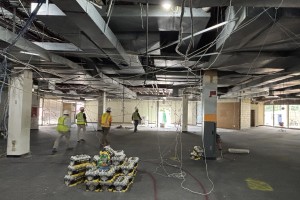
If your building is more than 20 years old, it’s especially important to plan for modern expectations, such as improved accessibility, family restrooms, and updated HVAC approaches.
Identify must-haves before nice-to-haves. When funds are limited, you have to prioritize. I recommend starting with must-haves like:
- Accessibility upgrades and code compliance
- A comfortable building environment
- Improvements that support how people actually use the library
From there, you can build a smart investment ladder, starting with changes that deliver impact quickly without overcomplicating the project:
- Furniture is relatively low cost while providing a fast refresh and immediate improvement in user experience.
- Paint and flooring can be surprisingly transformative while you plan for bigger work.
- Bathroom upgrades often improve accessibility and the overall library experience.
- Study rooms are very popular, but they often have overlooked requirements such as acoustical control, lighting, and separate HVAC that need to be holistically considered. Each room is its own self-contained design.
- Upgrades to windows, such as glazing, can reduce the gloomy feeling some older libraries struggle with.
Design for flexibility. Libraries are always evolving to meet community needs that change over time. Rather than building lots of single-purpose rooms, look for ways to create flexible, multiuse spaces that can be adapted over time. Even if you can’t change the structure dramatically, you can make planning decisions that keep spaces from becoming locked in to one use.
Bring in daylight—and put people where the light is. Natural light is one of the most powerful feel-good improvements a library can make. Many older libraries limited daylight to protect collections, but today there are strategies to balance protection with creating more welcoming spaces.
Even if you can’t enlarge windows, you may still have options like skylights or improving electric lighting (including better color temperature options) to make the space feel brighter and more comfortable.
Also, look at who gets access to windows. If staff work areas are buried away from daylight, it may be worth rethinking layouts so more people benefit from light and views.
Don’t ignore acoustics. Noise issues can undermine the whole library experience. Sound may travel through ducts, loud zones may bleed into quiet ones, and community rooms may impact reading areas. Consider adjacencies, finishes, and how mechanical systems can carry sound. Discuss acoustical liners, duct wrapping, and sound attenuators with your design team. If you can, reserve funds for post-occupancy modifications.
Think in decades. A good renovation isn’t just a grand reopening moment—it’s an investment. It can be tempting to cut costs upfront, but careful early decisions often pay off in lower maintenance and better overall performance.
Prioritize durability in high-traffic areas and consider life-cycle thinking for major systems. Over decades, many components will need maintenance or replacement, and planning for that reality upfront helps avoid future budget shocks.
Renovations don’t have to be all-or-nothing. With a phased approach and clear priorities, you can make steady progress toward a library that’s more welcoming, resilient, and future-ready—without losing sight of your budget.