Genuine reference callers don’t typically insist that their twin is stealing nutrients through their belly button, then ask the librarian to describe their own belly button and whether they have piercings. But libraries still get the calls.
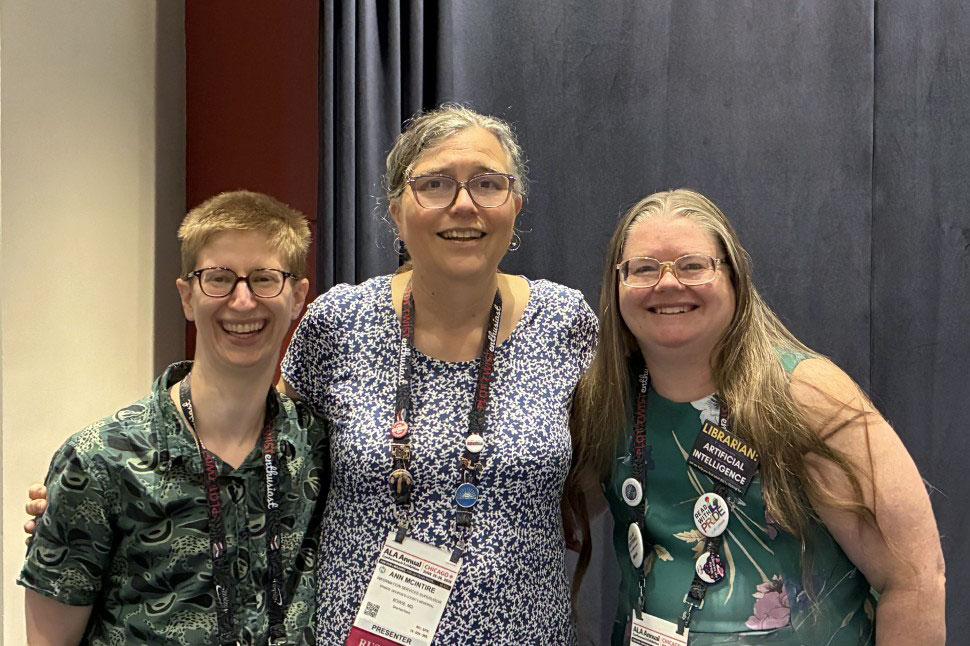
This type of unsettling interaction was the subject of “‘That Guy’: Addressing Patron Sexual Harassment in Reference Services,” a session of the American Library Association’s 2026 Annual Conference and Exhibition in Chicago on June 29.
“‘That guy’ is someone who is weird for sexual purposes but not necessarily sexually explicit,” explained Jennifer Goodland, technical services librarian at San Juan College in Farmington, New Mexico. He (or she) occupies a position between acceptable behavior and overt sexual harassment, which makes it difficult to respond to or even properly identify. When Goodland received calls from one particular “that guy” over a period of eight months, “it never occurred to me to report it,” she said. “What would I even say?”
“That guy” takes advantage of a workforce trained to be helpful and nonconfrontational, a culture of intellectual freedom that discourages judgment of patron requests, and the distance and anonymity of phone and chat service.
Last year, the Creepy Caller Census emerged on a Reddit thread to help libraries identify, document, prepare for, and effectively react to such incidents (including “Belly Button Guy,” whose calls have been reported in multiple states). But mounting a successful, systemic response is a challenge. “It doesn’t fit the standard harassment frameworks, and there’s nothing legally eligible to act upon,” Goodland said.
Panelists recommend encouraging employees to trust gut feelings and document patterns of behaviors and the feelings they create, and empowering them to say no to unreasonable requests. “It’s very difficult to turn off ‘service mode,’ but we want librarians to feel supported,” said Ann McIntire, information services supervisor at Prince George’s County (Md.) Memorial Library System. McIntire said her library also created an incident documentation system through Google Forms and scripts to respond to inappropriate callers, particularly those who are seeking to direct the librarian to perform in a certain way.
“Be as boring as possible, because they’re looking for a reaction from you,” McIntire added.
The Creepy Caller Census is the most comprehensive record about this phenomenon that currently exists, said Becca Greenstein, STEM librarian at Northwestern University Libraries in Evanston, Illinois. But it’s imperfect—it’s not on a librarian-owned platform, it could vanish if the thread gets deleted, and it’s not built to any established data standard. The panelists are planning a future survey that can more rigorously collect data to inform effective response throughout the profession.