The American Library Association (ALA) and The Pokémon Company International (TPCi) broke new ground in October 2025 when they teamed up to offer free materials to school and public libraries to create Pokémon Clubs.
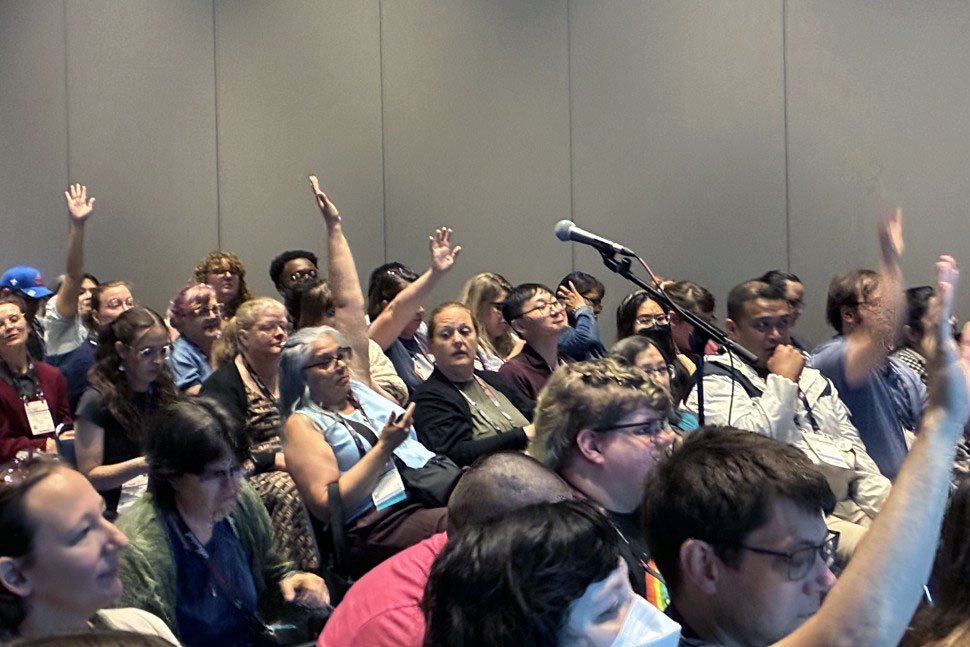
At the “Pokémon Club @ Your Library: Engaging Young Learners Through Play and Community” session, held June 26 at ALA’s 2026 Annual Conference and Exhibition in Chicago, TPCi representatives and librarians who offer the clubs in their libraries discussed the first nine months of the partnership—TPCi’s first of this kind—and what the clubs can offer libraries and their young users.
TPCi Casual Play Lead Leonardo Ortiz Villacorta announced that 730 libraries—65% public and 35% school—have created clubs through the program so far. “We say it is a useful resource for kids to learn skills while playing,” including reading, math, strategy, and social-emotional skills, Villacorta said.
“Offering the club as a hands-on activity is such a great thing,” noted Karyn Lewis, teacher librarian at Memorial Parkway Junior High in Katy, Texas. “Administrators are vocal about wanting less screen time, and parents also like to know that their kids are not going to be in front of a screen.”
Daniel Patron, library associate at Chula Vista (Calif.) Public Library, said his club sessions start with a presentation before the gaming starts. “I pride myself on the presentation portion, which has to do with language or science,” he said, and can often include advanced concepts. Club members may be a bit young for French literature, for example, but one presentation introduced The Three Musketeers by discussing the Pokémon that are based on characters from the 1844 novel. “Seeing it through a Pokémon lens makes it something they can grasp,” Patron said.
Jessica Lincoln, channel development manager for Casual Play at TPCi, provided details about what the club kits include. Libraries that register receive physical materials such as Demo Decks (smaller decks of Pokémon cards that help introduce game mechanics), Battle Academy (an easy-to-learn board game), Raid Battle (a collaborative game), and activity sheets. Club coordinators also receive access to an ALA Connect space to share ideas and advice, a handbook that provides guidance for running a club, ideas for programming, and webinars and other professional development opportunities.
Villacorta assured attendees that, while the complex rules and extensive world of Pokémon can be intimidating, librarians don’t need to be experts to operate a club. In fact, more than 15% of club coordinators reported knowing nothing about the game before they started, he said. “The clubs are a safe, nurturing environment to learn in a scaffolded way,” for both coordinators and participants.
“You may come in saying, ‘I know who Pikachu is and that’s it,’” Lincoln said. “But the materials will get you to where you can say, ‘Not only do I know who Pikachu is, I know Charizard and Squirtle too.”