
Who says teens are disaffected?
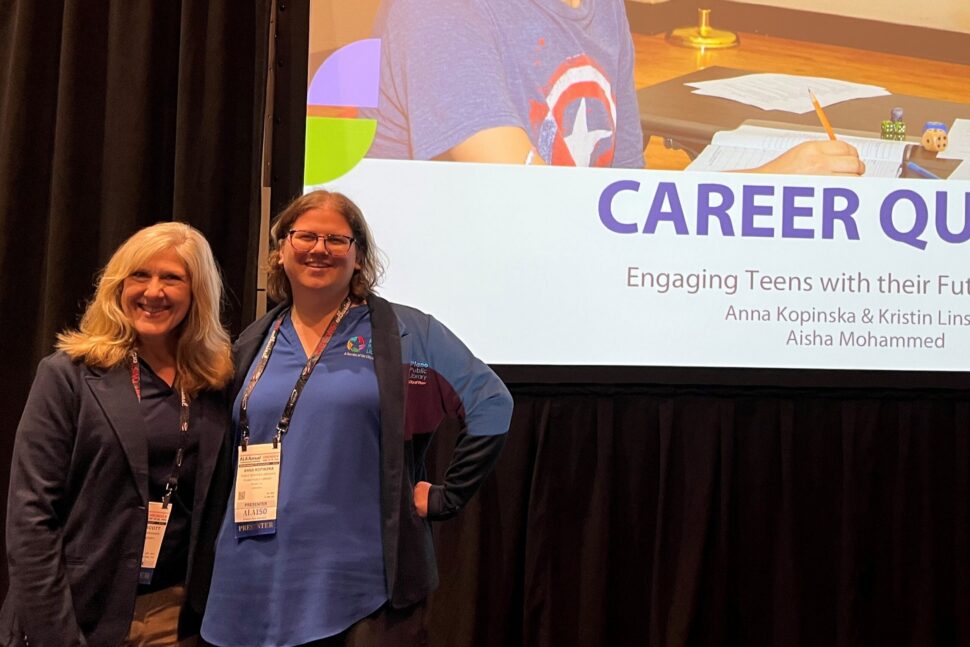
At “Career Quest: Engaging Teens with their Future Careers,” presenters Anna Kopinska and Kristin Linscott discussed how their library has helped young people get excited about professional opportunities and gain confidence in managing finances.
Kopinska, senior public services librarian at Plano (Tex.) Public Library (PPL), and Linscott, development and community partnerships coordinator at PPL, shared tips for teen workforce programming at a June 27 session of the American Library Association’s (ALA) 2026 Annual Conference and Exhibition in Chicago.
For the past couple of summers, PPL has offered a workshop designed to help teens envision—and plan for—their futures. Library organizers combined career exploration activities, financial literacy training, and tabletop role-playing to appeal to 9th- through 12th-graders.
The presenters said the goal extends beyond introducing workforce skills. “We want to make sure we’re not just getting them in the door but that we’re creating lifelong learners as well,” Kopinska said.
The program grew out of feedback from local teens, who expressed interest in both career exploration and financial education. Especially on topics related to money management, Kopinska said, “teens come in droves and are so grateful for it afterward.”
PPL’s Career Quest program consists of three-hour sessions over three days. On the first day, teens explore career fields and meet professionals from various industries. Organizers initially asked participants to rotate among speakers for individual conversations, but they found teens were more comfortable asking questions in a panel format, where there was “safety in numbers,” Linscott said.
The second day looks at personal finance, as participants work with financial professionals to build realistic monthly budgets and learn about real-world expenses. On the final day, teens use tabletop role-playing games to navigate unexpected life events, with dice rolls determining everything from setbacks to successes as players work toward a savings goal.
The multi-pronged approach has resonated with teen participants. At the conclusion of the program, 86% of them reported feeling more knowledgeable about career options, 90% said they had gained a better understanding of financial matters and expenses, and 90% planned to apply what they had learned. More than three-quarters said the game-based simulation was their favorite part of the experience.
Library organizers also observed behavioral shifts, including teens practicing networking skills, initiating conversations with professionals, and expressing increased confidence in navigating future career paths.
Linscott emphasized the importance of community partnerships in this type of hands-on, real-world programming. Representatives from businesses, universities, workforce organizations, and financial institutions not only provided expertise but also lent credibility to the program while exposing teens to a variety of career pathways. She encouraged librarians to “start with curiosity” when approaching potential partners, and emphasized the importance of listening, clearly communicating mutual expectations, and coordinating partner schedules six to eight months in advance.
For librarians interested in adapting the model, the speakers suggest giving teens autonomy, incorporating community professionals, and using gameplay to make career and financial education both engaging and memorable.
One unexpected outcome was the relationships participants built with one another. As teens collaborated during the three-day experience, many exchanged contact information and stayed connected afterward. Kopinska added: “Libraries are a source for community.”